West Denton Primary School
Spanish
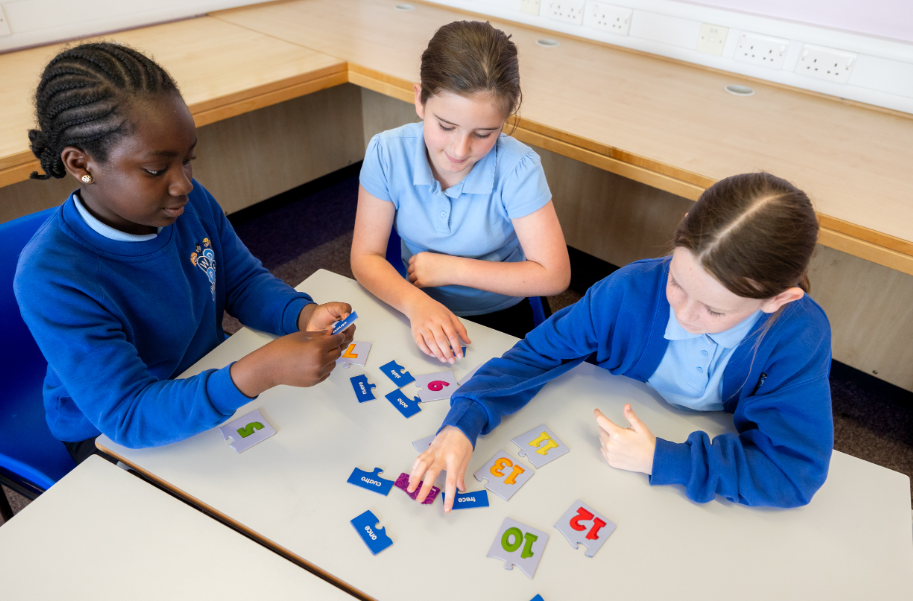
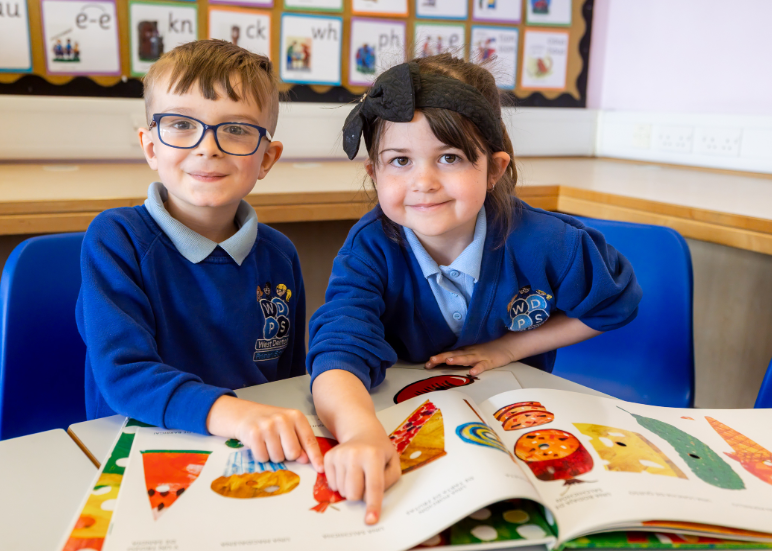
At West Denton Primary School, Spanish is taught through engaging, interactive lessons that focus on developing pupils’ confidence in speaking, listening, reading and writing. In Key Stage 1, children are introduced to Spanish through songs, games and simple vocabulary to build early awareness and support a smooth transition into more structured learning in Key Stage 2. In Key Stage 2, pupils continue to learn through a combination of songs, repetition and practical activities, helping to develop vocabulary and accurate pronunciation. Lessons are carefully sequenced so that pupils revisit and build on prior learning, progressing from words and phrases to sentences and short pieces of writing. Pupils are encouraged to use Spanish regularly through dialogue, questioning and role play. Cultural learning is also central, with children exploring traditions, festivals and daily life in Spanish-speaking countries to deepen their understanding and enjoyment of the language.
National Curriculum Aims
The national curriculum for languages aims to ensure that all pupils:
- understand and respond to spoken and written language from a variety of authentic sources
- speak with increasing confidence, fluency and spontaneity, finding ways of communicating what they want to say, including through discussion and asking questions, and continually improving the accuracy of their pronunciation and intonation
- can write at varying length, for different purposes and audiences, using the variety of grammatical structures that they have learnt
- discover and develop an appreciation of a range of writing in the language studied.
Pupils in KS2 should be taught to:
- listen attentively to spoken language and show understanding by joining in and responding
- explore the patterns and sounds of language through songs and rhymes and link the spelling, sound and meaning of words
- engage in conversations; ask and answer questions; express opinions and respond to those of others; seek clarification and help
- speak in sentences, using familiar vocabulary, phrases and basic language structures
- develop accurate pronunciation and intonation so that others understand when they are reading aloud or using familiar words and phrases
- present ideas and information orally to a range of audiences
- read carefully and show understanding of words, phrases and simple writing
- appreciate stories, songs, poems and rhymes in the language
- broaden their vocabulary and develop their ability to understand new words that are introduced into familiar written material, including through using a dictionary
- write phrases from memory, and adapt these to create new sentences, to express ideas clearly
- describe people, places, things and actions orally and in writing
- understand basic grammar appropriate to the language being studied, including (where relevant): feminine, masculine and neuter forms and the conjugation of high-frequency verbs; key features and patterns of the language; how to apply these, for instance, to build sentences; and how these differ from or are similar to English.
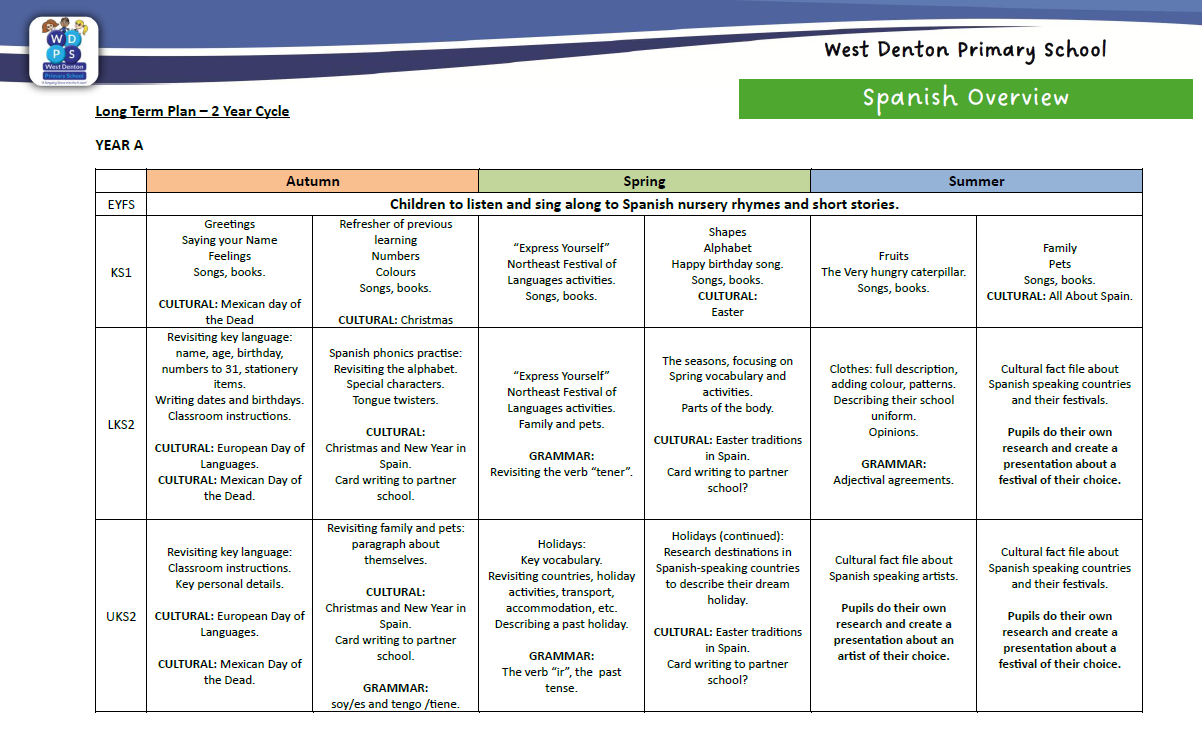
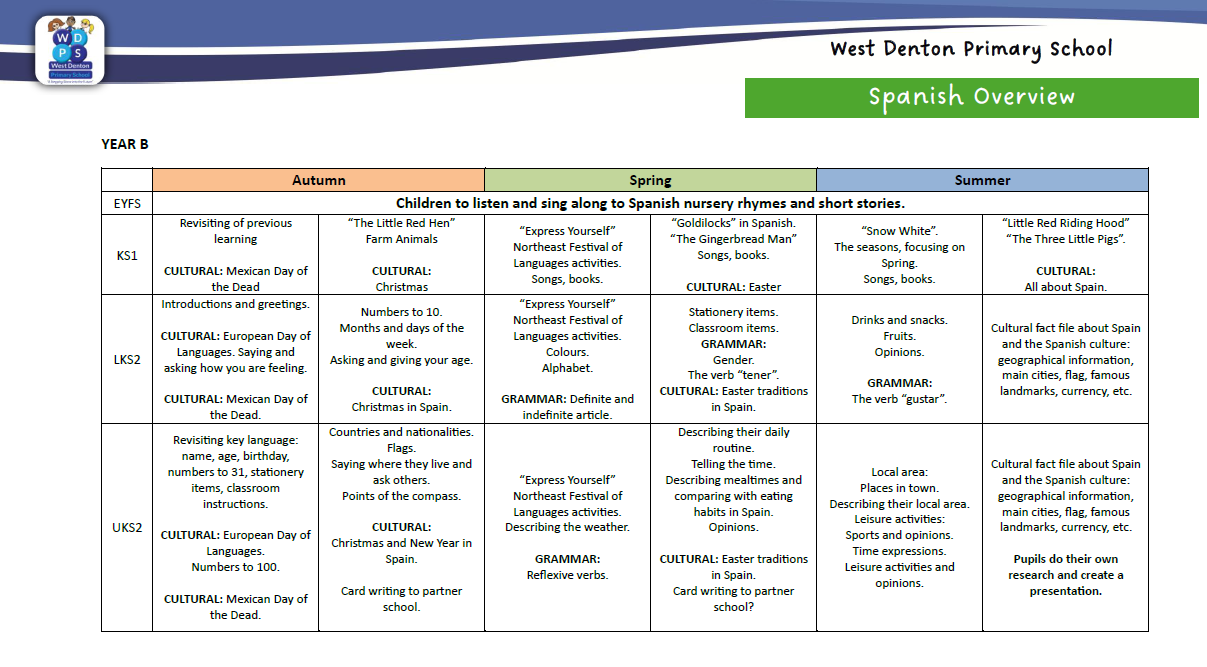
Overview