
West Denton Primary School
Our Curriculum
At West Denton Primary School, we are committed to providing a purposeful, inclusive and inspiring curriculum that equips every child with the knowledge, skills and confidence they need for the next stage of their education and for life beyond school. At West Denton Primary School, we enjoy learning and growing together. Core literacy and numeracy skills are at the heart of all we do, and our ambitious curriculum is designed to spark curiosity, nurture creativity and foster a lifelong love of learning.
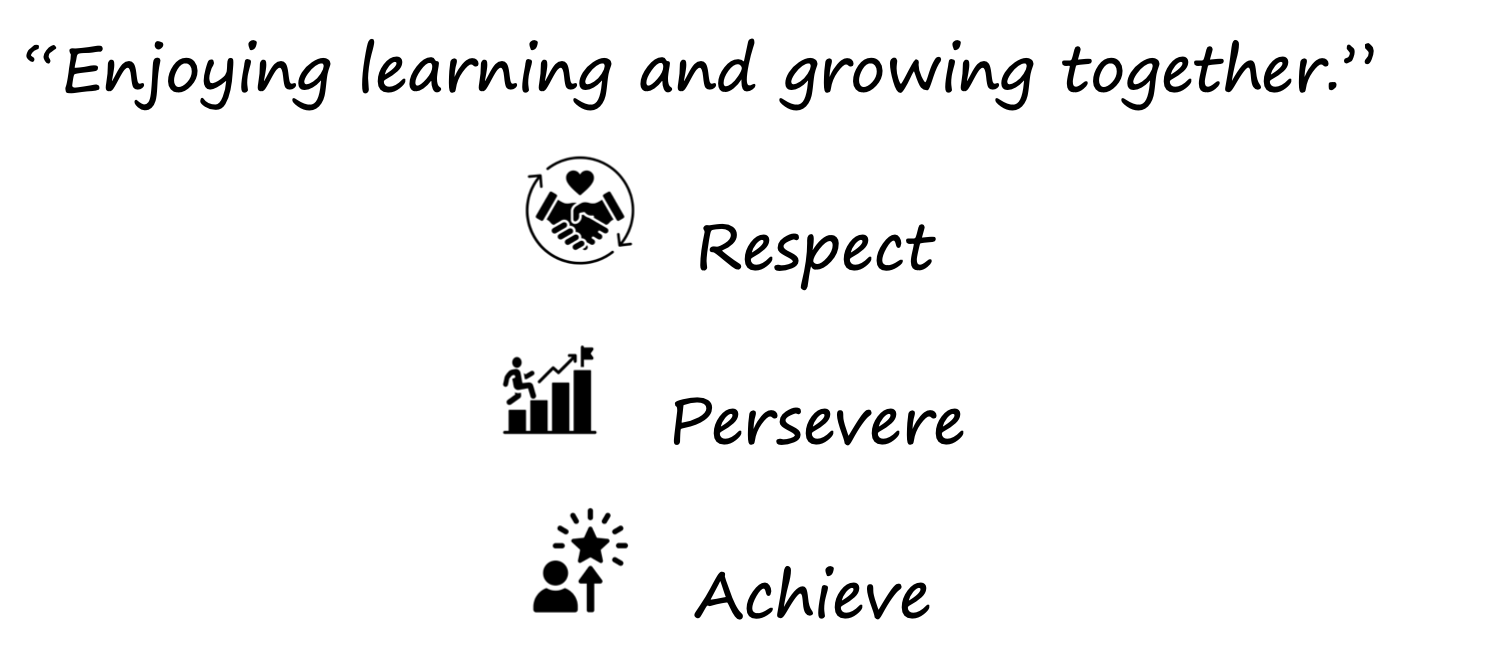
Everything begins with our school values of Respect, Persevere and Achieve. These values are woven throughout our curriculum and school community, underpinning our shared belief that every child can succeed. We encourage children to respect themselves, others and the world around them; to persevere when faced with challenge; and to strive to achieve their very best in all aspects of school life.
We believe it is our responsibility to help children understand the opportunities available to them beyond the school gates and to broaden their horizons through rich and meaningful learning experiences. Through a curriculum that develops resilience, independence and metacognitive skills, we empower children to become confident learners who understand how to learn, reflect and grow.
Our curriculum is carefully tailored to meet the needs of all our children. We celebrate our local community and heritage while helping children develop an understanding of the wider world. Significant individuals from local, national and international contexts are woven throughout our curriculum, ensuring children see themselves and others represented in their learning. This promotes engagement, aspiration, empathy and a sense of belonging.
Our curriculum is designed to be progressive and sequential, ensuring that knowledge and skills build over time. Substantive and disciplinary knowledge sit at the heart of each subject, with meaningful links made across areas of learning to strengthen understanding and retention. At West Denton Primary School, we are proud of our evidence-informed approach to teaching and learning. We recognise that memory is central to learning and therefore carefully plan opportunities for children to revisit, retrieve and apply prior knowledge. By making connections between past and new learning, children develop deeper understanding, greater confidence and lasting knowledge, enabling them to respect, persevere and ultimately achieve.
We ensure that our curriculum is accessible for those children with disabilities or special educational needs and that our curriculum complies with the Equality Act 2010 and with the Special Educational Needs and Disability Regulations 2014.
What underpins teaching and learning at West Denton Primary School?
At West Denton Primary School, we strongly believe in consistency across all subjects to help support our pupils feel familiarity in the routines of their lessons so that they can learn to their full potential. From our Pupil Book Study training, our high quality lessons will include the six principles below:

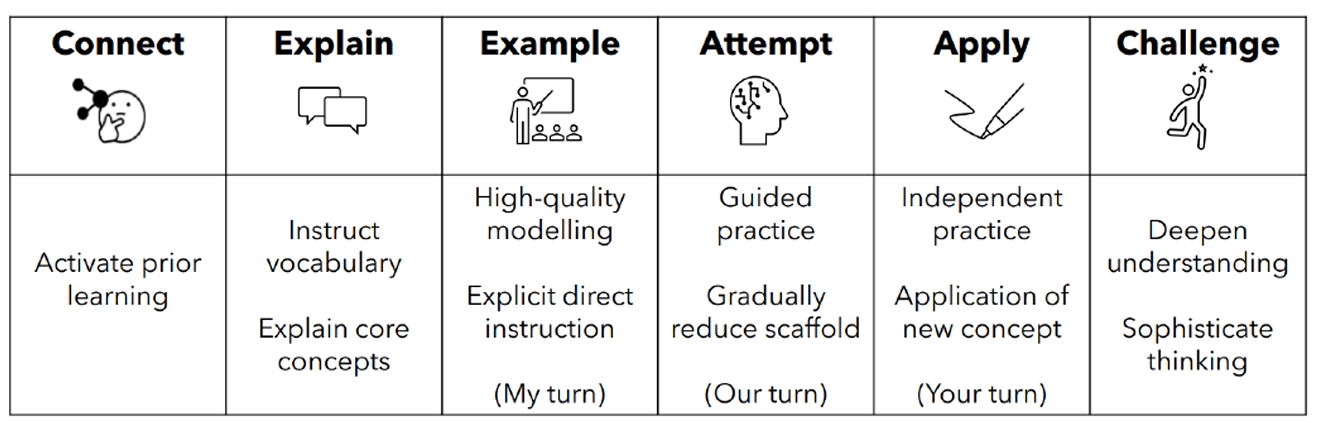
These principles are not linear and often, within a lesson, these principles will be utilised a number of times, at different points. As a school, we believe that children learn best when these principles are employed by teachers to help build on previous learning, reduce cognitive load and ensure knowledge has more of a chance of entering their long-term memory. Chunking of content and repetition of knowledge is imperative for pupils to retain their new learning.
It is important to note that for some objectives in the curriculum, it is appropriate for more time to be spent in a lesson, using one principle. For example, if pupils were learning long division, they may spend the majority of their time attempting the method so that teachers can address any misconceptions.
Any tasks or resources should act as a tool for pupils and be shared in their books; they should be encouraged to look back and find key information they need.
What underpins teaching and learning at West Denton Primary School?
Connect – Lessons start with a task that connects new content to knowledge pupils already have. This allows pupils to access learning they have so that they can then build on this later in the lesson. This task is often documented in pupils’ books, but some connect activities can be through oracy and a prompt displayed on the board.
Explain/Example (my turn) – Care is taken when explaining new content to ensure it is: clearly explained, concise, pre-rehearsed, carefully chunked to avoid cognitive overload. Explanations should be linked with an example to show children. This should be through the use of a WAGOLL (What a Good One Looks Like) or, when appropriate, WABOLLS (What a Bad One Looks Like). WAGOLLs should be on display throughout the lesson (on desks, in books, on the working wall or on the board) so that pupils can refer back to it.
Attempt (our turn) – This stage is crucial and should be given a lot of thought. Our turn is time for pupils to have more independence with new content but closely guided and supported by the teacher. Pupils practise new learning through a group task, on whiteboards, through oracy-based discussions and using manipulatives. How much time spent on this should be carefully considered. During the ‘attempt’ stage of the lesson, pupils are given time to explore and rehearse new learning through a low-threat activity. To ensure this is successful, oracy should be used to harness the learning. Teachers can use this time in the lesson to address common misconceptions and allow pupils to make mistakes so it can be used as a teaching point.
Apply – This part of the lesson allows pupils to apply new knowledge they have learnt to different contexts and scenarios. The aim is for them to work as independently as possible (with the appropriate scaffolds in place). During this part, teachers can check in to ensure the new learning is accurate and has been understood.
Challenge – Challenge underpins all parts of the lesson, and all pupils should be given the opportunity to be challenged. These challenges should deepen the learning or allow children to draw connections across knowledge they already have and the new learning being taught. Some challenges may be pre-planned and resourced whereas other challenges may be displayed on the board, given verbally or use marks on the page.
What does a lesson at West Denton Primary School generally include?
Refresher – Refreshers are used at the beginning of a lesson as part of the ‘Connect’ principle. Refreshers help ‘refresh’ pupils’ memories and helps them anchor new learning to knowledge they already have. Refreshers should be purposeful and focus on content that directly links to the new content being taught and isn’t just a previous objective that has been taught. Pupils recognise the refresher activity and its significance from this symbol:

Vocabulary – Vocabulary is the key to unlocking new learning. Throughout our curriculum, vocabulary is purposefully sequenced and planned to support pupils with becoming experts in the different areas of the curriculum. When exploring new vocabulary, maximum of 1-2 per lesson, pupils will analyse the word, often exploring its etymology, to understanding its meaning. A task should be planned around this vocabulary to help pupils understand it in different contexts. Looking at examples and non-examples of it. Visuals are key to supporting this.
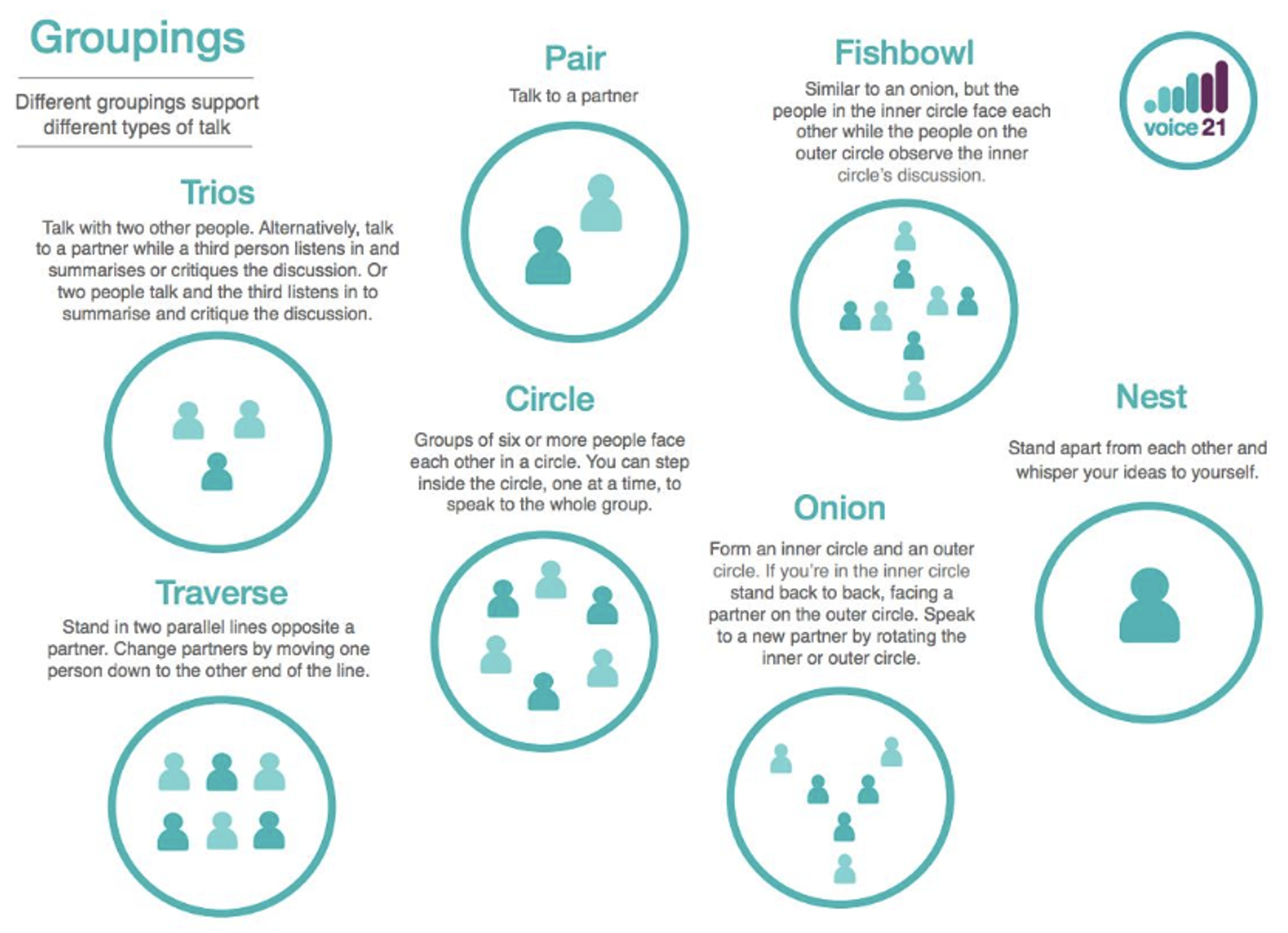
Oracy – Pupils practise and rehearse new content in a range of groupings. Oracy is a vehicle for learning and should be utilised to enhance the learning opportunities in the lesson. Pupils are given the opportunity to ‘nest’ their ideas before sharing ideas with a group or whole class. Please see below to explore different groupings and where to find oracy ideas and resources.
Examples (WAGOLLs/WABOLLs) – Using WAGOLLs (What a Good One Looks Like), pupils are able to see a high-quality example of what they need to create or produce. Pupils should be part of the process when creating a WAGOLL and these are often put in children’s books for them to refer back to. This symbol is often used:

Once pupils have a secure understanding on new concepts/ content being taught, WABOLLs (What a Bad One Looks Like), can then be introduced for pupils to apply their new learning to, whether it’s correcting them or explaining the errors.
Hard Thinking – Hard thinking tasks can be used during any point of the lesson to challenge pupils and deepen their learning. There is a bank of different hard thinking tasks that can be used. For pupils to recognise the harder thinking moments of a lesson, the symbol below is used:

Challenge – Not to be seen as an additional resource, but a task that has been well-designed to deepen the learning. This could be through a hard thinking task or it could be through off the cuff challenges given verbally to the pupil. This means staff don’t need to write out full questions in pupil’s books. It is made clear to the pupil and others where additional challenge has happened from this symbol:

What does assessment look like at West Denton Primary School?
At West Denton Primary School, assessment is an integral part of teaching and learning. We use a range of proportionate assessment strategies to identify what pupils know and remember, address misconceptions and inform future teaching. Teachers regularly use questioning, feedback, retrieval practice, quizzing, observations and low-stakes assessments to check understanding and support pupils in securing the important knowledge and skills set out in our curriculum. Alongside these day-to-day assessments, we use diagnostic, summative and standardised assessments at key points throughout the year to monitor progress, identify gaps in learning and ensure all pupils, including those with additional needs, achieve their full potential. Assessment information is used carefully to improve outcomes for pupils and support leaders in evaluating the effectiveness of the curriculum. This ensures that children at West Denton Primary School know more, remember more and are well prepared for the next stage of their education.
Responsive Teaching
Assessment of pupils’ substantive knowledge is an ongoing process. Class Teachers deploy many evidence informed shared strategies in order to gain a firm understanding of starting points both at the start of a unit and the start of each lesson. Staff are adept at tailoring plans and resources to ensure learning is cumulative and that children have a firm understanding of essential knowledge within the area of study, meaning that outcomes are strong. Responsive teaching is adopted by all practitioners; clear goals are set and learning is planned based on current levels of understanding. Teachers are skilled in ensuring scaffolding supports all learners to meet lesson objectives and amending tasks during a lesson to meet any emerging needs. This assessment for learning is an ongoing process and means that subsequent lessons are planned effectively.
Starting Points
At the start of each area of study, starting points are established in class teacher planning – these are taken from the long term curriculum subject plan, which clearly identifies linked areas of study from previous years. Rather than a ‘What do we already know about xxx…?’ class teachers support children in revisiting previous knowledge in a specific and strategic way. This may be in the form of a ‘Refresher’ or may take the form of specifically designed tasks which prompt the children to recall specific knowledge from previous, linked study.
Marking and Feedback
As a school, our marking and feedback practice is underpinned by the Education Endowment Foundation’s recommendations within ‘Teacher Feedback to Improve Pupil Outcomes’. High quality instruction lays the foundations for effective feedback: pupils have a solid understanding of learning intention, task and criteria for success, therefore feedback is purposeful and a common language is shared. Feedback addresses any learning gaps which are identified through formative assessment as part of each lesson. Feedback is based on teachers’ assessment both within and after a lesson. It is timely and can be both written and verbal. Crucially, formative assessment informs future planning and next steps.
Knowledge Organisers
Knowledge Organisers are an overview of the key knowledge children are expected to gain over an area of study. Through high quality instruction and a well-planned and progressive learning journey, children add depth, context and reasoning to the base knowledge on these documents. Knowledge Organisers are a useful assessment tool and are edited and adapted (cut into sections, areas blanked out, etc.) to form quizzes through which knowledge can be assessed.
Memory
We understand that memory lies at the heart of learning. For this reason, and to help pupils with remembering essential substantive knowledge, key content is repeated– both within a unit and over time; ‘revisits’ are mapped so that learning from previous terms/years is not forgotten. Lesson sequences are progressive, meaning that learning builds over time.
Cumulative Quizzing
Within a unit, key pieces of substantive knowledge are identified in each lesson. These are then used as the basis of a low-stakes cumulative quiz, which class teachers use as ongoing assessment of pupils’ learning. Adjustments to lessons can then be made to go over information of concepts, to build understanding and address gaps in knowledge.
Strategies for Recall and Retention
A range of recall strategies are used consistently across the curriculum to support recall and retention. If learning is repeated, it is more likely to be remembered. Also, a useful assessment tool, this, in turn, informs class teacher practice, as adjustments are made based on the outcomes of these low-stakes assessment strategies.
Questioning
Class Teachers are adept at questioning – a range of techniques are used to ensure that class teachers have an excellent overview of children’s knowledge. Wait time and priming is used by class teachers to ensure that all children are active learners and understand that everyone needs to engage in hard thinking. From there, cold calling is often deployed so that class teachers can assess knowledge and understanding formatively.
Pupil Book Study
Through Pupil Book Study, both within the classroom performed by class teachers, and at a distance from class study performed by subject leaders, teachers gain an excellent grasp of children’s knowledge and understanding of a given areas of study, or a wider concept within the curriculum. By talking to pupils, and using their books as a prompt, we can assess their confidence around an areas of study. Can they articulate their learning verbally, or through action? Can they link learning to other areas of the curriculum? Do they have a thorough understanding of key vocabulary and can this be used in context? Dialogic classroom talk gives teachers an avenue through which to assess children’s knowledge and understanding.